7 map-locked hero rules Marvel Rivals players argue about most
Video: The MAP Decides Our Heroes in Marvel Rivals
Want articles like this for your own video to promote it on YouTube and Google? Order them through the Telegram bot @sat_sit_bot. It writes articles around your video, embeds the video and publishes them on popular niche websites (no ads). Your first 50 articles are free.
· based on the channel Salty Phish
Key takeaways
- Salty Phish's map-locked challenge forces a new hero pool every match, decided by the random map in quickplay.
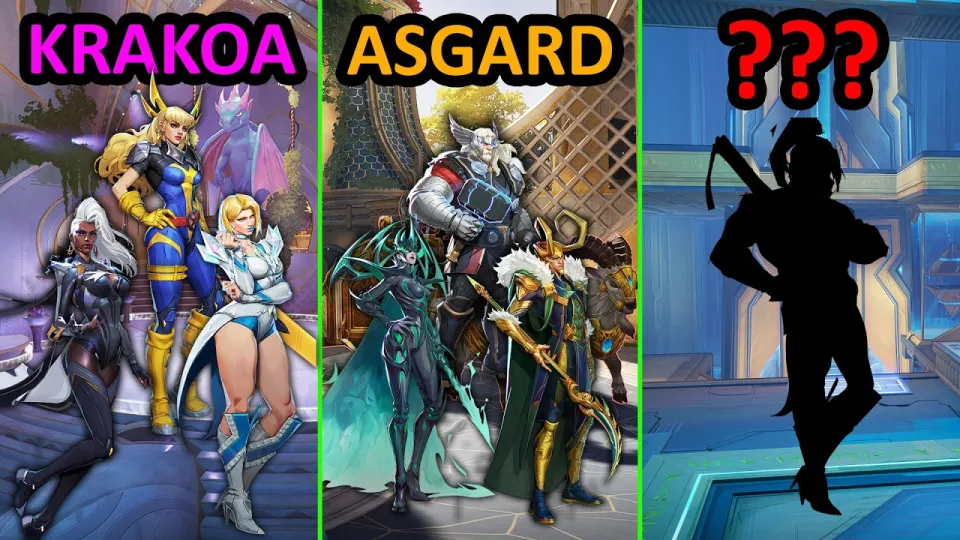
- Klyntar maps point to Venom and symbiote-adjacent picks; Asgard maps open Thor, Loki and Hela.
- Shin-Shibuya is a 2099 setting, which pulls Punisher and Captain America into the conversation alongside Iron Man.
- Wakanda's spaceport ties the Guardians of the Galaxy to Klyntar through Rivals lore, not just the films.
- Devil Dinosaur lives in New York with Moon Girl, so Lower Manhattan arguments go beyond street-level heroes.
Marvel Rivals is a hero shooter where the map pool is as much a roster filter as the ban phase, and the map-locked hero challenge popularized by streamer Salty Phish turns that into a rule set: whatever map the queue throws at you decides which heroes you are allowed to pick. The format ran through quickplay with a fresh comp every match, and the Season 9 Mystery of Thebes content in the background. You can watch the full run and the live version of the challenge on Salty Phish's Twitch channel.
How the map-locked hero challenge works in Marvel Rivals
The rule is simple to state and hard to referee: the random map is the only thing that picks your team. Queue into a Klyntar map and the symbiote corner of the roster opens up, starting with Venom; land on an Asgardian map and Thor, Loki and Hela become legal. Every match resets the pool, so a player who mains one hero has to justify a new pick list several times an evening.
The interesting part is not the randomness but the justification. Marvel Rivals ships with a deep lore layer across its maps, and nearly every location has a canonical link to a dozen characters who never appear on it in the comics' most obvious stories. That is where the challenge stops being a party game and becomes an argument about which connections count: a building with a company name on it, a background NPC, a spawn-room animation, a voice line between two heroes.
A practical way to run it yourself:
- Lock the map first, before anyone hovers a hero.
- Build the legal pool from the map's location, faction and era, not from the hero's home city alone.
- Allow one "lore stretch" pick per match, but make the player defend it out loud.
- Keep a written list per map so the next session does not relitigate the same picks.
The seven map rules that decide the roster
Seven map families carry most of the debate, and each one produces a different kind of pick list. The categories below are the ones that come up repeatedly when players try to formalize the challenge.
- Klyntar and the symbiote maps. Venom is the anchor pick. Any hero whose story in Rivals touches the symbiote invasion or Knull's influence is a defensible addition.
- Asgard. Thor, Loki and Hela are the core. The Asgardian maps also invite anyone tied to the realm's politics rather than its geography.
- Shin-Shibuya. A 2099 setting, which drags in future-version logic: Punisher and Captain America are both tied to that era in Marvel continuity, and Iron Man gets argued in through the Stark-Fujikawa building that appears in the location.
- Wakanda, including the spaceport. The Wakandan maps in Rivals are framed around an intergalactic Wakandan empire, which is why Guardians of the Galaxy picks keep getting proposed.
- Lower Manhattan and New York maps. Street-level heroes are the obvious answer, but Devil Dinosaur and Moon Girl operate in New York, which breaks the street-level-only assumption.
- The Collector's museum. Backstory material places Jeff, Psylocke and Mantis in the Collector's collection, so the museum map has a canon pool that has nothing to do with geography.
- Midtown and generic city maps. The loosest category, and the one where almost any hero with an office, a headquarters or a New York address can be argued in.
Why Shin-Shibuya and the 2099 maps split the community
Shin-Shibuya is the clearest example of a map where era matters more than postcode. The location is built on a future version of Marvel's corporate landscape, and the Stark-Fujikawa name ties it back to Iron Man through a subsidiary rather than through Tony Stark personally. That is enough for some players and not enough for others.
The counter-argument is that Punisher and Captain America belong to the same 2099 continuity, so if future-era logic is allowed for one hero it has to be allowed for all of them. There is also a lighter case for Punisher based on in-map signage rather than lore. The result is a map with three or four legitimate answers and no agreed winner, which is exactly the kind of dispute the challenge is designed to generate.
Wakanda, Klyntar and the Guardians loophole
The Wakandan spaceport is the single best argument against treating maps as pure geography. In Rivals lore the Guardians of the Galaxy are hired by Wakanda and dispatched toward Klyntar to deal with the symbiote threat, and the Milano can be seen leaving the spaceport in map-specific animation. That makes the entire Guardians roster legal on a Wakandan map and, by extension, on Klyntar itself.
Once that connection is accepted, the pool logic changes. A map is not a place a hero lives; it is a node in a story that several heroes pass through. The same reasoning is what pulls Winter Soldier into Wakandan maps, since the Rivals continuity has his arm coming from Wakanda rather than only from the films, and it is why the space-faring half of the roster keeps showing up in debates about maps that are technically on Earth.
New York maps and the Devil Dinosaur problem
Lower Manhattan looks like the easiest map to rule on and turns out to be one of the hardest. Street-level heroes are the intuitive pool, but Devil Dinosaur and Moon Girl are New York characters, and a giant dinosaur living in the city is canon rather than a joke. Any rule that says "street-level only" has to explain why a dinosaur does not count.
The same problem repeats across the New York set. Once you accept that a map's pool includes residents, visitors, employers and people with a building named after them, the list grows fast. The practical fix is to separate tiers: core picks that are uncontested, secondary picks that need one sentence of justification, and stretch picks that need a real argument. That structure keeps the challenge playable without turning every match into a research project.
Common disputes players raise about map-based comps
Most disputes fall into a few repeatable shapes, and knowing them makes the challenge easier to run with a group. The first is era mixing: a map set in a future timeline invites future versions of heroes, but players disagree on whether that should apply to the whole roster or only to characters explicitly shown in that setting. The second is background detail: a building name, a poster or a spawn animation is evidence for some groups and noise for others.
The third is lore versus film logic. Rivals writes its own continuity, so an argument that works in the MCU may not hold in-game, and the reverse is also true. The fourth is team-up pressure: players naturally want to keep duo and team-up bonuses intact, which pushes picks toward heroes that already synergize rather than heroes that fit the map. The fifth is simple fairness, since a map with a narrow pool can leave a player stuck on a hero they do not enjoy for an entire match.
Setting house rules in advance solves most of this. Decide whether era resets the pool, whether background props count, and whether team-up bonuses can override a lore pick. Write the answers down once and the argument moves from "is this legal" to "is this a good pick," which is a more interesting question.
Useful links
- Salty Phish on Twitch for live challenge runs and the full map-locked format.
- Salty Phish on Twitter for schedule and clip posts.
- Salty Phish on TikTok for short-form highlights.
- Salty Phish on Reddit for community threads.
- Salty Phish on Instagram for behind-the-scenes posts.
Final thoughts on map-locked Marvel Rivals
The map-locked hero challenge works because Marvel Rivals built a map pool that is dense with story rather than decorative. Klyntar, Wakanda, Shin-Shibuya and New York each produce a different kind of pick list, and the disagreements between them are the content. Anyone who wants to run it should start with the seven map families above, keep a written pool per map, and accept that a few picks will always be contested.
Salty Phish is the channel behind this particular run, and the format is worth watching for the pick arguments as much as the gameplay. If you want to see the challenge live and catch the next variation, head to Salty Phish on Twitch and watch the queue decide the team.
Source: The MAP Decides Our Heroes in Marvel Rivals · Markdown version
Questions & answers
What is the map-locked hero challenge in Marvel Rivals?
It is a self-imposed rule set where the random map you queue into decides which heroes you are allowed to play. Klyntar maps point toward Venom and symbiote-linked picks, while Asgardian maps open up Thor, Loki and Hela. Every match resets the pool, so players rebuild their pick list each game.
Why is Shin-Shibuya so hard to rule on?
Shin-Shibuya is a 2099 setting, so the argument shifts from location to era. Iron Man gets pulled in through the Stark-Fujikawa building, while Punisher and Captain America are tied to the same future continuity, and in-map signage gives Punisher a lighter case too. Different groups accept different amounts of that evidence.
Do the Guardians of the Galaxy count on Wakandan maps?
Yes, in Rivals lore the Guardians are hired by Wakanda and sent toward Klyntar to deal with the symbiote threat, and the Milano appears leaving the Wakandan spaceport in map animations. That connection also makes the Guardians defensible on Klyntar itself. The same reasoning brings Winter Soldier into Wakandan maps.
Should Devil Dinosaur be allowed on New York maps?
Devil Dinosaur operates in New York alongside Moon Girl, so a strict street-level rule does not hold up. If a map's pool includes residents rather than just street-level crimefighters, a dinosaur living in the city qualifies. Many groups handle this with tiers: core picks, secondary picks and stretch picks that need justification.