How to Survive a 200-Player Hunt in Rust as a Solo Builder
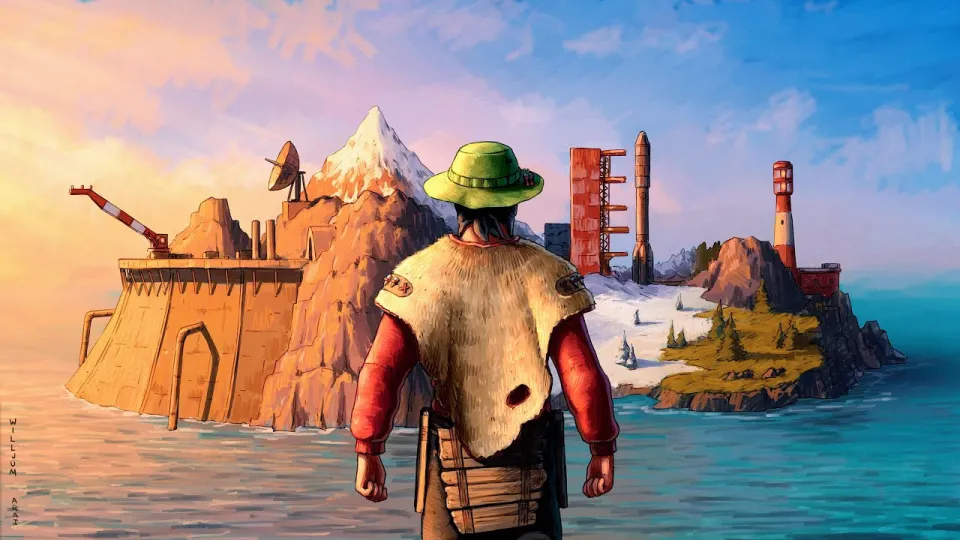
Video: When a Solo Rust builder Vs 200 Hunters...
Want articles like this for your own video to promote it on YouTube and Google? Order them through the Telegram bot @sat_sit_bot. It writes articles around your video, embeds the video and publishes them on popular niche websites (no ads). Your first 50 articles are free.
· based on the channel Willjum
Key takeaways
- The premise: one solo builder against a hunting party of roughly 200 players on the same server.
- Willjum built the base first and treated every farming run as a timed, exposed risk.
- Friendly players delivered gear and rope mid-run, which is how solo survival often actually works.
- A bear encounter turned into a full inventory of meat with no commentary — small wins matter.
- The format is built for a sequel: duo, trio and longer-prep versions are the natural next step.
A solo Rust builder survives a 200-player hunt by treating the base as the win condition, not the fight: build small, build layered, farm in short exposed bursts, and let the map's geography and a few friendly players do half the work. Every decision in a hunt like this comes down to one question — does it make the base harder to find, harder to break, or cheaper to rebuild? If the answer is no, it is not worth the risk.
The scenario comes from Willjum's video "When a Solo Rust builder Vs 200 Hunters...", where one builder on a server full of hunters tries to finish a base while the rest of the map is actively looking for him. Support for that kind of run, including early access and behind-the-scenes material, is available through Willjum's Patreon page.
What a 200-hunter scenario actually means in Rust
A hunt is not 200 players sweeping one grid — it is a server-wide incentive to find and raid a single target, which changes the math of every routine task. Hunters split into small roaming groups, cover roads and monuments, and share coordinates when they spot a build. For the builder, the practical consequences are simple: farming routes get shorter, crafting happens in bursts, and any structure visible from a main road is already compromised.
In practice this means the usual solo comfort habits — long sulfur runs, a big open compound, an obvious base silhouette — become liabilities. The builder's advantage is that hunters have to search a whole map, while the builder only has to defend one grid.
Step-by-step: how to build and hold a solo base under pressure
A solo base under hunt conditions is won in the first hour and lost in the first careless door. The sequence below is the order that keeps a one-man wipe alive.
- Scout before you place. Pick a spot off the main roads, away from monuments and behind terrain that blocks line of sight from the nearest road. A base nobody walks past is worth more than a base with better loot access.
- Build the core first, the shell second. Get a small, fully enclosed core with a tool cupboard and sleeping bag down before expanding. If the run ends early, you still have a spawn point and a stash.
- Layer, don't widen. Extra walls, an airlock and a second door cost less than a bigger footprint and slow raiders far more than square meters do.
- Farm in timed bursts. Take short, repeatable routes with a hard cap on how long you stay exposed, and bank resources at the base instead of carrying them.
- Split your storage. Never keep all sulfur, scrap and components in one room; a single breach should not end the wipe.
- Keep a fallback kit. One box with a weapon, armor and a bag outside the main structure gives you a second life after a raid.
Base design choices that punish a large hunting party
Base design is the only part of a hunt the builder fully controls, so it should be tuned for delay rather than for looks. Compact multi-layer designs with honeycombing, fake doors and a misleading entrance force raiders to spend explosives on empty rooms, and every rocket wasted on a decoy is a rocket not spent on your loot room.
Height and terrain matter as much as walls. A base tucked against a cliff or built into a slope limits the angles attackers can use and makes it harder to spot from a distance. Roof access and a small shooting floor let a solo player watch approaches without standing in the open, which is often enough to make a roaming group pick an easier target.
Supplies, allies and the human side of a solo run
Solo survival in Rust is rarely purely solo, and the video shows it plainly: friendly players delivered gear and rope to the builder mid-run. Accepting a delivery is a calculated risk — it costs exposure and trust — but a single rope or a stack of components can save an hour of farming.
Treat every friendly contact as a transaction with a short window. Meet away from the base, never lead strangers to your door, and assume any delivery could be a scouting trip. When it works, though, it is the difference between a stalled build and a finished one — and moments like a bear encounter turning into a full inventory of meat are the small wins that keep a long run going.
Common questions and doubts about the format
Viewers of the run keep circling the same points, and they are worth answering directly for anyone planning a similar challenge.
- Is one builder versus a whole server fair? It is not balanced, and that is the point — the interest comes from watching a builder work around a disadvantage rather than fight it head-on.
- Would a duo or trio version work better? Yes, and it changes the challenge: more hands mean faster building but a bigger footprint and more visibility on the map.
- Does more prep time make it easier? A longer prep window helps, but it also gives hunters more time to find the site, so the trade is not automatic.
- Why do creators keep returning to solo stories? Because the tension is legible: one base, one player, and a clock that only runs one way.
Useful links
- Willjum on Patreon — support the channel and get access to bonus material.
- Willjum on Twitch — live streams.
- Willjum on Twitter — updates and announcements.
- Creative Commons Attribution 4.0 — the license covering music used in the video.
Final thoughts
The solo-versus-hunt format works because it strips Rust down to its core loop: gather, build, hide, repeat, and hope the base outlasts the search. The lessons transfer to any wipe — compact layered bases, short farming runs, split storage and a fallback kit are what keep a one-player wipe alive when a whole server is looking. Willjum's channel is the place to see that tension play out, and the run leaves obvious room for duo, trio and longer-prep variations. If you want more of this kind of experiment, supporting the channel through Patreon is the most direct way to make it happen.
Source: When a Solo Rust builder Vs 200 Hunters... · Markdown version
Questions & answers
How does a solo player survive when a whole Rust server is hunting them?
By making the base the priority instead of fights: build a small layered core early, farm in short exposed bursts, split storage so one breach does not end the wipe, and keep a fallback kit outside the main structure. Terrain and an off-road location do as much work as walls.
What base design is best against a large hunting party?
Compact multi-layer designs with honeycombing, fake doors and a misleading entrance are the strongest choice because they force raiders to waste explosives on empty rooms. Building against a cliff or slope also limits attack angles and makes the base harder to spot.
Would a duo or trio version of this challenge be harder or easier?
It is different rather than simply easier. More players mean faster farming and building, but a larger footprint, more visible activity and more people to coordinate — which is why duo and trio versions are the most requested follow-ups to the solo run.
Does more preparation time before the hunt give the builder an advantage?
Partly. Extra prep allows a more layered base, more stored explosives-resistant materials and a stocked fallback kit, but it also gives hunters more time to locate the site, so the benefit depends on how well the builder stays hidden while preparing.